Key Differences Between Marine Antenna and Shipboard Antenna
Today,
wireless technology is not only important for terrestrial life but also for
marine applications. Have you ever wondered how you can enjoy wireless
technology even when you're in the middle of the ocean? There could be two
antennas behind it, one marine antenna designed for sea communication.
And another shipboard antenna fixed to the vessel for onboard communication and
control. The question now is, are these two antennas the same? If not, what are
the differences between them? This post will focus on this aspect. Here, we
will explore the key difference between marine antennas and shipboard
antennas. Let’s get started!
What is a Marine Antenna?
A
marine antenna is a special kind of antenna that is mainly designed for ships,
boats, and other marine vessels. The purpose of this antenna is to let you
connect to the wireless technology. Just remember your last movie, where
characters were using smartphones and even telephones to send and receive calls
when they were on the boat. This is what marine antennas can enable users to do when they
are on their marine travels.
With
the help of a marine antenna, you can send and receive signals over water. This
antenna is similar to any other antenna that is used in terrestrial wireless
connectivity. But the only difference is that marine antennas are designed to
perform well even in the harsh weather and atmospheric conditions of the ocean.
Introduction
to Marine Antenna and Shipboard Antenna
What is a Shipboard Antenna?
A
shipboard antenna is not a separate wireless device from a marine antenna. It
is just a part of the broader category of marine antennas. Let’s not cause any
confusion! A marine antenna is a general term used in any marine environment.
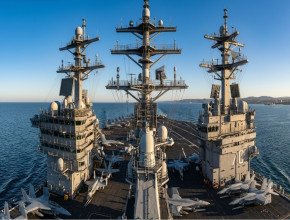
While the shipboard antenna specifically refers to antennas
that are used on large ships for wireless communications. It is mounted at high
points of the ship for better signal strength. Its design is durable enough to
handle harsh marine conditions like saltwater, wind, and vibration.
Key Difference between Marine Antenna and Shipboard Antenna
Let’s talk about the difference between a marine antenna and a shipboard antenna:
Design
A
shipboard antenna is indeed part of a marine antenna. But the obvious
difference that you can see between the vast category of marine antennas and a
dedicated shipboard antenna is their design. Yes, most marine antennas are
simpler and smaller in size. With this unique advantage, they are easy to
install and take up less space in the marine vehicles. That gives extra space
in the boat for more and other stuff.
On
the other hand, when you compare shipboard antennas with other UHF marine antennas. One clear sign you can find is
that shipboard antennas are larger and more powerful. They are built to handle
harsh ocean environments and continuous operation. Their large size ensures a
high gain. And it maintains better communication in large ships and passenger
boats.
Function
Most
marine antennas are designed to provide wireless communication in small boats
or for coastal use. If you ever travel on such a marine vehicle. You may find a
VHF marine antenna to get access to simple communication, navigation, and
weather updates. Their support helps users to get access to basic ship-to-ship
communication. However, they are not made for complex data transmission.
On
the other hand, a shipboard antenna is an advanced type of marine antenna. The
large ships that travel from one city to another or country to another are
often equipped with this wireless solution. And ensure offering functions like
radar, GPS and satellite links for long-distance and mission-critical
operations. The reason why naval shipboard antenna provides advantageous
features and functionality is that ships travel long distances in open seas.
Their supporting facilities help ensure continuous communication for both
passengers and the ship crew.
Frequency Range
Marine
antennas mainly work on limited VHF or UHF frequencies. And that is not a
negative aspect, but the very operations that happen in those marine vehicles
are limited to that. These bands well enough to perform the job and provide short-range
communication over water. For example, a VHF marine antenna is used for ship-to-ship or
ship-to-shore radio. While a UHF marine antenna supports onboard systems and
radar. These work fine even in the harsh ocean environment.
While
shipboard antennas operate across multiple frequency bands for radio, radar,
and satellite systems. It works with multiple bands, such as VHF, UHF, HF (high
frequency), MF (medium frequency), L-band, and C-band, depending on the system
being used. That is the point where ship antennas outperform other marine
antennas. It gives you flexibility and versatility that enable long-distance
global communication via satellite and radio. The crew members on
the large ship can get continuous monitoring and navigation across international
waters.
Usage
This
is the last but not least point that will clear your doubt. Marine antennas are
used on many marine vessels, including small boats, yachts, fishing boats,
coast guard patrol boats, and rescue vessels. They are helpful to establish
short-range communication, GPS navigation, weather alerts, and safety
messages between nearby ships or coastal stations. The primary use of these
ship antennas is to maintain VHF and UHF radios for coastal operations.
Talking
about the Shipboard antenna, it is used in professional and defense
communication systems. It is installed on cargo ships, naval ships, cruise
ships, oil tankers, and research vessels. Working with multiple frequency
bands, this ship antenna helps users to ensure safe navigation, ship control,
and communication over long ocean routes. During long-distance travelling, it
is the solution that avoids obstructions and shows the right path.
Bottom Line
We
drove deeply and explored the difference between marine and shipboard antennas.
We understood that both of them are closely related but have many differences
in their function, range, and application. On the one hand, “marine antennas”
refers to all antennas used for marine wireless communication. On the
other hand, shipboard antennas are a part of marine antennas but are used only
for large vehicles like cargo ships, naval ships, and cruise ships.
Both
of the antennas are very important in making wireless communication and
performing various operations in marine environments. With them, you may not
get access to the internet and mobile calls. And ships may not receive reliable
communication support through regular routers while at sea. The advanced
functionality and technology of both devices support modern maritime operations
and safety. If you want to purchase any of the antennas, connecting with the
best marine antenna manufacturer is the best approach.