How Electronic Warfare and SIGINT Antennas Support Spectrum Dominance
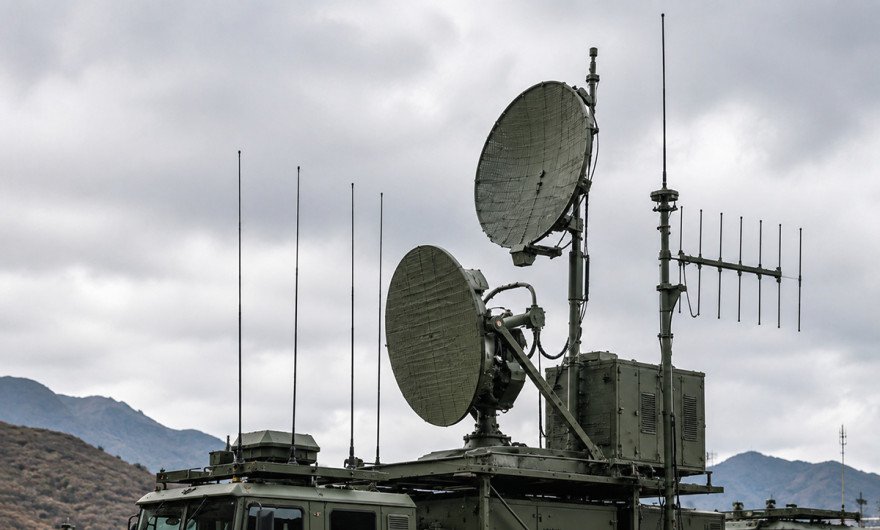
Victory in modern defense operations increasingly depends on who controls the electromagnetic spectrum. An electronic warfare antenna sits at the center of that control. It's the antenna that actually picks up an enemy's signal, jams a hostile transmission, or shields friendly systems from interference — everything else in the system depends on that first catch. And that's true whether you're intercepting communications or trying to knock a drone out of the sky; get the antenna wrong, and nothing downstream works the way it should. In this guide, we'll go through the main antenna types used in EW and SIGINT, and what actually matters when you're picking one for your platform.
The Role Of Antennas In Electronic Warfare And SIGINT
Electronic warfare depends on three core actions: detecting signals, blocking transmissions, and protecting friendly systems from jamming or interference. Every one of these actions starts with an antenna.
A signal intelligence antenna picks up transmissions across a wide frequency range. It helps analysts to identify what is being sent and often where it is coming from. Without a properly designed antenna, none of the downstream signal processing or jamming equipment has anything useful to work with. This is why antenna selection is an important part of EW system design. It is the foundation that everything else depends on.
Wideband Antennas For Interception And Direction Finding
Intercepting a signal is only useful if you can also work out where it came from. This is where wideband antennas come in. That's their job — catching the signal and figuring out its direction at the same time. And hostile signals don't cooperate by sitting neatly in one narrow band, which is why a military surveillance antenna has to cover a much broader frequency range than you'd expect.
Instantaneous Bandwidth And Frequency Agility
A key factor here is instantaneous bandwidth. In simple terms, it's how wide a frequency range the antenna and its receiver can watch at once, without needing to retune to catch something outside that window. Wider instantaneous bandwidth means fewer signals slip through unnoticed. Frequency agility matters just as much since threats often hop between frequencies specifically to avoid detection. When an Electronic Warfare antenna is paired with a system that can track these shifts quickly, it gives analysts a real advantage in catching signals.
Jammer Antennas: RCIED, Manpack And GPS Anti-Jam
Once a threat is identified, jammer antennas take over. A high power RCIED jammer antenna is built specifically to block remote-controlled improvised explosive devices by flooding the frequencies used to trigger them. These antennas need to handle significant power output since the goal is to overwhelm the triggering signal completely.
Power Handling For Jamming Applications
Power handling capability separates a genuinely effective jammer antenna from one that underperforms in real conditions. An antenna that cannot handle sustained high power output will degrade quickly or fail exactly when it is needed most. This matters even more for portable systems like a military manpack jammer antenna, where soldiers carry the equipment directly into the field and where consistent performance is required without the antenna overheating or losing efficiency during prolonged use.
GPS jamming and protection work a bit differently. A GPS jammer anti-jam antenna either blocks GPS signals in a hostile context or protects friendly systems from having their own GPS signal jammed by an adversary. Both directions matter depending on whether your team is on offense or defense in a given operation.
Counter-Drone (C-UAS) Antenna Considerations
Drones have changed the threat landscape significantly and counter drone systems now rely heavily on specialized antenna design. A UAV Anti drone antenna needs to detect and often disrupt drone communication. It controls links which typically operate across specific commercial and military frequency bands.
Polarization And Beam Coverage In EW
Polarization is another factor that matters a lot in counter-UAS work. Drones do not always fly with a predictable orientation. That is why an electronic countermeasure antenna is built with the right polarization coverage. It disrupts drone signals more reliably, no matter which angle the drone is flying at. This same design principle carries over into other platforms too — from fighter aircraft and military helicopters to naval warships and armored vehicles, wherever electronic warfare systems need dependable coverage.
Beam coverage plays a role here too. This property determines whether signals get sent or received in a narrow, focused direction. If you already know roughly where a threat is coming from, a narrow beam actually works in your favor — it's easier to lock onto and track a signal from that one specific direction. However, anti-drone applications typically require broader coverage. Drones can come from multiple angles simultaneously. A properly designed counter-UAS antenna balances these factors to maintain reliable detection and disruption across a realistic range of drone behavior.
Why Connect with Antenna Experts for Reliable Antenna
Antenna Experts is a well-known antenna manufacturer in India. We build quality electronic warfare and SIGINT antennas. Our antennas are designed and tested to military and environmental standards such as MIL-STD-810 (environmental testing), MIL-STD-461 (EMI/EMC), MIL-STD-188 (military communications), and relevant IEEE and IEC standards. Our strong experience as a trusted antenna manufacturer allows us to provide a high quality of antennas to our clients. You'll find our antennas deployed across military aircraft, naval warships, armored vehicles, and border surveillance setups — among other defense applications. We not only sell our products in India but also in other countries like the USA, Canada, etc.
Frequently Asked Questions
Q1. What antenna is used for signal intelligence?
Mostly wideband antennas. That broad range means an analyst can catch and identify all kinds of signals in one sweep, instead of juggling different antennas for different frequencies.
Q2. How does a counter-drone antenna work?
Frequencies used for drone communication get picked up by a counter-drone antenna. From there, the system either tracks the signal for identification or disrupts it to break the connection between the drone and its operator.
Q3. What makes an antenna suitable for jamming?
A jamming antenna needs strong power handling paired with wide frequency coverage, matched closely enough to the target signal that it can overwhelm or disrupt the transmission without failing under continuous use.
Q4. How does GPS anti-jam work, and what kind of antenna handles it?
Think of it as a fight to keep the GPS signal from getting drowned out. When someone tries to jam it, an anti-jam antenna pushes back using tricks like adaptive nulling, tuning out the noise from that direction while still holding onto the real signal. That's how the system keeps its lock even under attack.