What Makes an IFF Antenna Different from a Standard Antenna
At first glance an antenna looks like an antenna. But once you get into aviation and defense systems, that assumption falls apart quickly. An IFF antenna does a job that a standard communication antenna was never designed for. It helps identify whether an aircraft or vessel is friendly or hostile in real time, and that single function changes almost everything about how it needs to be built. This guide breaks down what actually separates an IFF antenna from the antennas used for regular communication and why that difference matters so much in defense applications.
What IFF Actually Means
IFF stands for Identify Friend or Foe. An identification friend or foe antenna works as part of a system. It sends out a coded signal and listens for the return coded signal from another aircraft or vessel that matches its own. If the reply is what is expected the system will mark the target as friendly. If the target does not respond or responds incorrectly it is flagged for further evaluation.
The IFF antenna is very different from a standard communication antenna. That is why it simply sends and receives voice or data without needing to run this kind of automated identification check. With the help of an Identification Friend Or Foe antenna, you can ensure speed and accuracy at critical moments. Especially in the place where a wrong decision could have serious consequences.
IFF Antenna vs. Communication Antenna
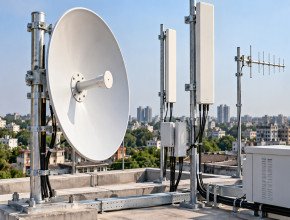
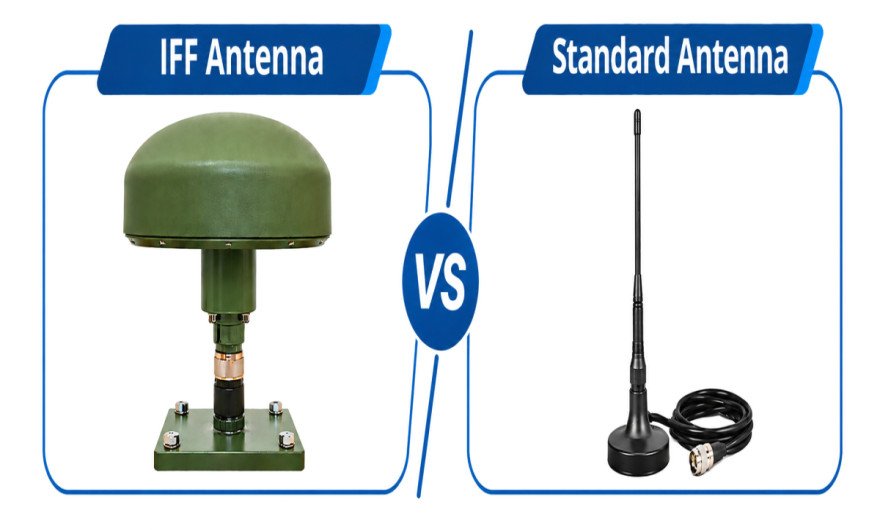
When people compare an IFF antenna vs a communication antenna, the differences go beyond just function. A regular communication antenna is generally optimized for range and voice or data clarity across specific frequency bands. An IFF transponder antenna, on the other hand, needs to be prioritized. It is known for its speed and reliability above almost everything else. The entire identification process happens in a fraction of a second. Check these key points about IFF antennas and understand how they become one of the reliable solutions:
- Response time: IFF systems need near-instant interrogation and response cycles. The antenna must support fast communication between the interrogator and transponder so identification can happen almost instantly. This quick response is important when aircraft or vessels are moving fast. It helps users in the important time when the decisions need to be made without unnecessary delay.
- Signal reliability: A missed or delayed IFF response can lead to a target being misidentified. It is a risk standard communication antenna do not carry. If the IFF antenna you buy is important, it must provide a strong and dependable signal during identification. Even a weak, or missed, or late response. All this can make identification hard. IFF antennas are designed to offer reliable communication in a variety of operating conditions. That helps the system make accurate identification decisions.
- Coverage pattern: Many IFF antennas use an omnidirectional aircraft antenna design. This is needed so the identification signal can be picked up. And here it does not matter regardless of the aircraft's orientation relative to the interrogating system. IFF antennas need to provide suitable coverage around the aircraft, ship, or ground platform. A wide coverage pattern helps the system send and receive identification signals from different directions. That means, you can receive signals from different directions in military applications. This allows the IFF system to work effectively. Even when the other aircraft or vessel is not directly in front of the antenna. It provides precise connections in heavy traffic.
- Frequency allocation: IFF systems usually operate in a given dedicated frequency band for the IFF antenna. That is separate from general communication bands.
ATC Antenna vs IFF Antenna
Another common point of confusion comes up when comparing High Gain ATC antenna vs IFF antenna systems. Air traffic control antennas focus on managing general aircraft communication and positioning data across civilian and mixed airspace. IFF antennas exist specifically for military identification purposes. It operates under a completely separate protocol built around security. And it is rapid verification rather than general traffic coordination.
Both systems may operate on aircraft simultaneously. They serve fundamentally different roles. Confusing the two during procurement can lead to selecting equipment. That does not actually meet the specific identification requirements a defense platform needs.
Where IFF Antennas Get Used
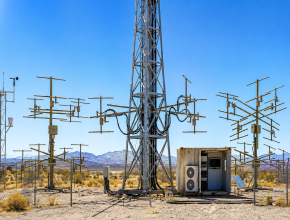
IFF antennas are used in military aircraft, naval ships, ground defense stations, and many other security platforms. They help identify friendly aircraft and vessels that support situational awareness and provide reliable identification information during military operations. The device is very important in training experiences and surveillance activities. The technology of IFF is not limited to aircraft. Some of the most common uses are:
- Military aircraft antenna systems for identifying friendly aircraft in contested airspace. With the help of this antenna, quickly recognize friendly platforms. And it reduces the risk of confusion during military operations. It helps in training exercises or sensitive missions.
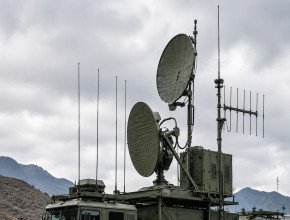
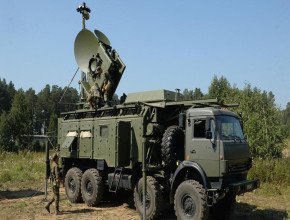
- Ground-based IFF antenna installations are used at defense facilities. It identifies approaching aircraft and checks whether there is any risk from the device or not. Using these systems supports ground control teams. It gives them identification information and helps them to track aircraft entering or passing through protected areas.
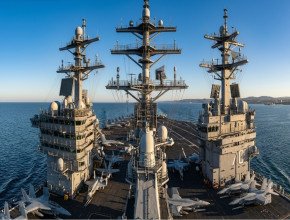
- Shipboard IFF antenna systems used by naval vessels. It identifies other ships and aircraft in the surrounding area. It helps naval crews understand that nearby platforms are friendly and support better awareness during patrols and operations.
Each application has slightly different requirements. It is based on platform size mounting constraints and the specific operational environment involved.
Why Choose Antenna Experts?
Antenna Experts is a trusted antenna supplier in India. We provide suitable choice antennas for IFF and other mission-critical requirements. We work with industries like aerospace, defense, aviation, ATC, naval, and homeland security. And provide our state of art devices for better communication. Our antennas are designed around standards such as ISO 9001:2015, ISO 14001:2015, ISO 45001:2018, MIL-STD-810G, and MIL-STD-461. Our company also holds a NATO NCAGE Code and supports defense-related procurement.
Our experience includes IFF, DME, ATC antenna systems and the High Gain ADS-B Antenna for aviation surveillance. This mix of industry experience, testing, quality processes and international standards. All these make it a practical option for demanding defense and aviation projects. Contact us now!
Frequently Asked Questions
1. What is an IFF antenna?
An IFF antenna is a type of antenna for military identification systems. It helps to identify a ship, aircraft or other platform as friendly. The antenna properly identifies friendly aircraft, vehicles or other devices and helps avoid attacks on them. It enables users to send and receive special signals. This enables the IFF system to rapidly and reliably identify other platforms.
2. How is an IFF antenna different from a standard antenna?
An IFF antenna is designed for fast and reliable identification signals. While when it comes to talking about a standard antenna, it usually handles voice, data, or general communication. IFF antennas must also meet specific frequencies. It should provide coverage, and performance requirements for defense applications.
3. Where are IFF antennas used?
IFF antennas are commonly used on military aircraft. You can also see it installed in ground-based defense systems, and other military platforms. They help these systems identify friendly aircraft or vessels. And it supports safer decision-making during military and defense operations.