How to Choose a Wind Profiler Radar Antenna
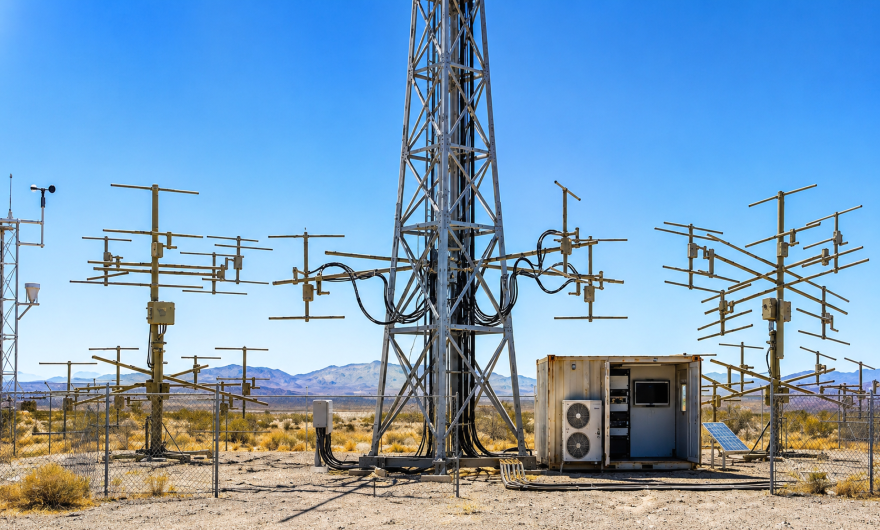
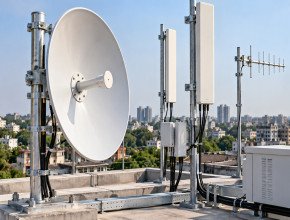
??A wind profiler radar antenna is a very important part of a ground-based radar system. It is mainly used to continuously measure wind speed and direction. But the antenna is not just limited to this application. It is used in many other applications where the antenna enables accurate atmospheric wind measurements.
Wind profiler radar antennas can be easily seen installed in airports, weather agencies, and research institutions. If you want to choose a wideband profiler radar antenna but are unsure how to do so, this guide will help you.
What a Wind Profiler Radar Antenna Actually Does
A wind profiler radar antenna is a crucial component in the radar system that sends radio waves into the atmosphere and receives the reflected signals from airborne particles. The signal processor analyzes the reflected signals. The radar uses the return time of the reflected signal (range gating) to determine the altitude of the sampled atmospheric layer.
The Doppler shift reveals the wind speed along that beam direction. This information helps in calculating wind speed and direction. Today, wind profiler radar antenna manufacturers in India design and build antennas using durable material, precision engineering, and RF testing. That makes the antenna accurately measure wind and monitor weather.
How to Choose a Wind Profiler Radar Antenna in India
You can explore Wind Profiler radar antennas by looking at these key features. Before choosing the right antenna manufacturer in India, you need to know:
1. True Vertical Pointing, Not Just Calculated
An ideal wind Profiler radar antenna should point its beam truly straight up. It should not be only estimating the vertical direction. Accurate vertical pointing provides more accurate wind measurements at different heights. This is especially important for weather monitoring. The use of wind radar antennas also helps in turbulence detection, and aviation safety.
2. Antenna Architecture and Beam Steering
Antenna architecture and beam steering are both important. These features determine how a radar antenna is built and how it directs radio signals. As a buyer, you must evaluate this feature. It affects measurement accuracy, beam steering capability and maintenance needs. Even so, it plays a role in deciding the overall cost of the antennas. You can check out these main types of radar antenna:
Phased-array antennas
Phased array antennas include many elements with individually controlled phase relationships. It allows electronic beam steering without moving parts. This tends to offer better reliability since there is nothing mechanical to wear out.
Microstrip or micro-patch arrays
Microstrip patch array antennas are flat, lightweight radar antennas with printed patch elements. It offers compact size, easy installation, and reliable performance. This antenna should be chosen for its compact footprint and ease of installation. It requires less complexity while mounting.
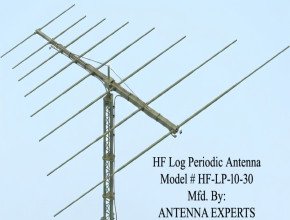
Yagi-based systems
Yagi-based antenna systems use multiple directional Yagi antennas. It provides focused signal transmission and supports reliable Wind measurements across different altitude ranges. The antenna uses multiple smaller antenna units. In some yagi based antennas, the units are paired with Luneburg lenses that focus waves precisely. It enables simultaneous narrow beams, improving accuracy.
None of these above radar antennas are universally the best Wind Profiler Radar Antenna. The thing is that the requirement is what you are looking for. The right choice will come from the altitude range, budget, and site constraints. You can talk to Antenna Experts, which is a leading Wind Profiler Radar Antenna Exporter in India. The company can help you with the right information about what type of antenna you should use for the specific architecture you are using.
3. Frequency and Altitude Range
Wind Profilers operate at different frequencies depending on how high they need to measure. If you choose a radar antenna that works with lower-frequency systems, that means it reaches a greater altitude, but their larger size can require you to have more installation space.
On the other hand, higher frequency systems are often better suited to boundary layers or lower tropospheric measurements with finer resolution. It can't monitor winds at high altitudes effectively and additional systems may be used when measurements across multiple altitude ranges are needed.
4. Build Quality and Environmental Durability
Radar antennas are mostly used for outdoor applications. That means they must be durable enough to withstand harsh environmental conditions. In remote or exposed locations, it is expected to run for years with minimal intervention. That is why, to purchase the right Wind Profiler radar antenna, you need to look closely at:
Materials
Antennas should be constructed of corrosion-resistant aluminum alloys and mounting hardware made of marine-grade stainless steel, especially for coastal or high-humidity locations.
Weatherproofing rating
The antenna has to go through heavy dust and heavy rain. That means the weatherproofing rating is an essential step to check. An IP66 or equivalent rating indicates strong protection against harsh environmental conditions.
Factory tuning
Before picking up any radar antenna, see the antenna installation process. Is it tuned to your place or not? Antennas that are factory tuned and don't require field adjustment, it reduces both installation time and the risk of a poorly calibrated setup.
Choose a Wind Profiler Radar Antenna from Antenna Experts
Antenna Experts is a trusted antenna manufacturer and a well-known wind profile radar antenna supplier in India with over 35 years of experience. We follow strict quality management practices and manufacture antennas in an ISO 9001:2015, ISO 14001 and ISO/OHSAS 45001:2018 facility. We design high-performance radar antennas in India for accurate atmospheric monitoring in demanding environments.
Our every antenna is engineered using precision manufacturing techniques and undergoes rigorous quality testing. This approach delivers reliable beam performance and long-term outdoor durability. From weather agencies, research organizations to aviation facilities, all these connect with Antenna Experts for our wind profiler radar antenna for dependable wind measurements. Our team assists you in simplifying everything for you, from architecture, frequency range, mounting configuration, installation site, and operational and other technical requirements to ensure you select the most suitable solution for your system.
FAQ
What's the difference between a radar Wind Profiler and a sodar Wind Profiler?
A radar Wind Profiler uses radio waves for higher altitude measurements. While a sodar Wind Profiler r uses sound waves for lower altitudes.
Why does true vertical pointing matter for a Wind Profiler antenna?
True vertical pointing improves Wind measurement accuracy. It reduces errors in atmospheric observations, turbulence detection, and aviation operations.
Do Wind Profiler antennas need regular field tuning?
Factory-tuned antennas generally require minimal field tuning. It reduces maintenance and installation time after deployment. antenna manufacturer